
3 Foods That Naturally Support Collagen Production During Menopause
- Sonhos Digitais

- 2 days ago
- 3 min read
Why natural collagen during menopause: matters more than ever
Many women begin to notice visible changes in their skin during menopause. Fine lines become more noticeable, the skin may feel thinner and drier, and joints can become stiffer than before.
These changes are not simply part of getting older.
One of the main reasons is the natural decline in estrogen.
Estrogen plays an important role in maintaining collagen, the body's most abundant structural protein. Collagen provides strength, elasticity and support to the skin, bones, tendons, ligaments and blood vessels.
Research suggests that women can lose a significant amount of skin collagen during the first years after menopause, contributing to changes in skin firmness and elasticity.
Although no food can completely stop this natural process, eating the right nutrients may help your body continue producing collagen efficiently.
What is collagen?
Collagen is a fibrous protein made primarily from amino acids, especially:
glycine;
proline;
hydroxyproline.
These amino acids form strong fibres that give structure to many tissues throughout the body.
Collagen represents approximately one-third of the body's total protein.
It is found in:
skin;
bones;
cartilage;
muscles;
tendons;
ligaments;
blood vessels.
As collagen production gradually declines with age, these tissues slowly lose some of their strength and flexibility.
Why natural collagen declines during menopause?
During menopause, estrogen levels decline significantly.
Besides regulating the reproductive system, estrogen also influences the activity of fibroblasts, the specialised cells responsible for producing collagen and elastin in the skin.
Lower estrogen levels are associated with:
reduced collagen synthesis;
thinner skin;
reduced elasticity;
slower wound healing;
increased skin dryness.
This is why many women notice visible skin changes within just a few years after menopause begins.
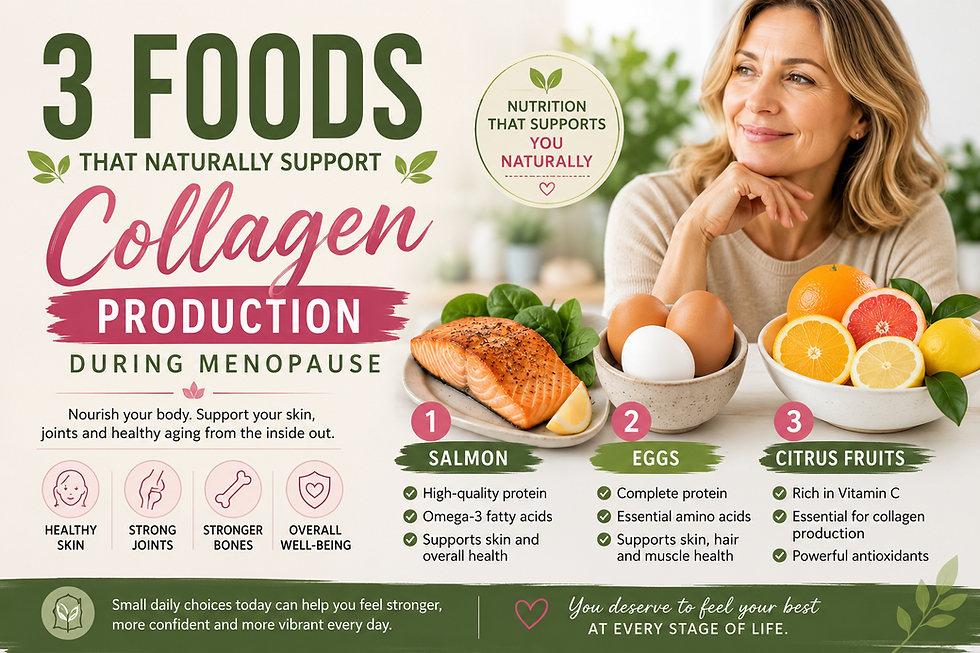
1. Salmon
Salmon is one of the best foods to include in a menopause-friendly diet.
Although salmon is not a major source of collagen itself, it provides several nutrients that support the body's natural collagen production.
These include:
high-quality protein;
essential amino acids;
omega-3 fatty acids;
selenium;
vitamin D.
Protein supplies the amino acids needed to build new collagen, while omega-3 fats may help support normal skin function and contribute to overall skin health.
Salmon also supports:
heart health;
muscle maintenance;
healthy aging.
Aim to include oily fish once or twice a week as part of a balanced diet.
2. Eggs
Eggs are among the most complete natural sources of high-quality protein.
They contain the amino acids needed for collagen formation and provide nutrients such as:
biotin;
selenium;
vitamin B12;
choline.
These nutrients help support healthy skin and overall cellular function.
Eggs are also an excellent choice for maintaining muscle mass during menopause, when age-related muscle loss becomes more common.
3. Citrus fruits
No nutrient is more closely linked to collagen production than vitamin C.
Without enough vitamin C, the body cannot produce collagen efficiently.
Citrus fruits such as:
oranges;
lemons;
grapefruits;
mandarins
are rich sources of this essential vitamin.
Vitamin C also acts as an antioxidant, helping protect skin cells from damage caused by free radicals.
Combining vitamin C-rich foods with adequate protein is one of the most effective dietary strategies to support natural collagen production.
Lifestyle habits that also protect collagen
Food is only part of the picture.
Healthy collagen production also benefits from:
regular physical activity;
adequate sleep;
avoiding smoking;
limiting excessive sugar intake;
protecting the skin from excessive sun exposure;
staying well hydrated.
Together, these habits help maintain healthier skin and connective tissues over time.
The bottom line
Menopause naturally changes the body's collagen production, but nutrition can still play an important role.
Choosing protein-rich foods such as salmon and eggs, together with vitamin C-rich fruits, provides the building blocks your body needs to continue producing collagen naturally.
Healthy aging is not about chasing perfection.
It is about giving your body the nutrients it needs to stay strong, resilient and healthy for years to come.
Comments