
Why Belly Fat Increases During Menopause: Understanding the Changes and How Nutrition Can Help
- Sonhos Digitais

- 2 days ago
- 2 min read
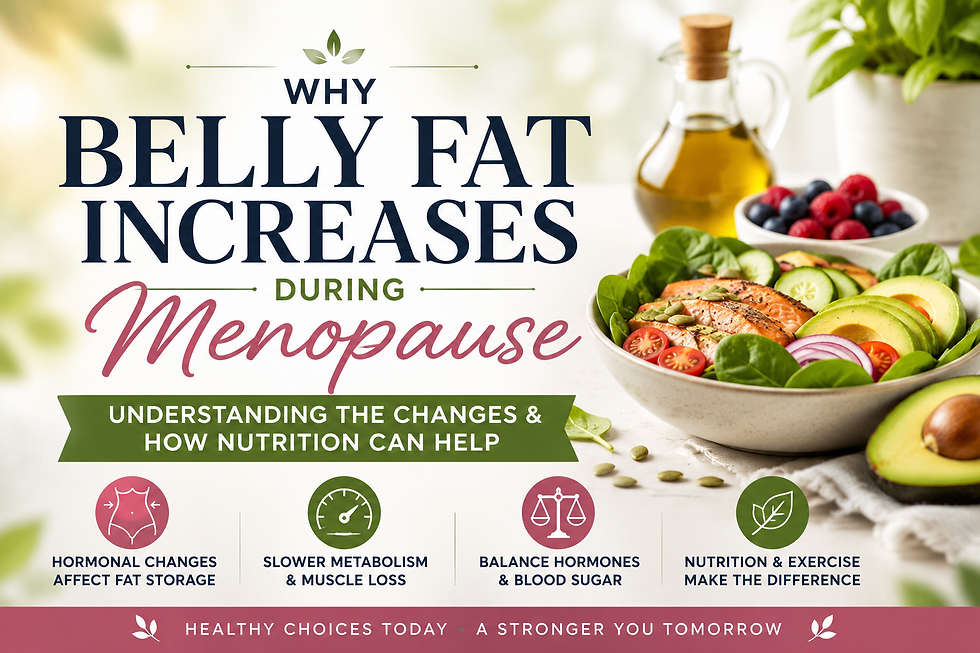
belly fat during menopause
Many women notice a frustrating change during menopause: even though they continue eating much the same as before, fat begins to accumulate around the abdomen.
This shift can feel confusing and discouraging. Clothes no longer fit comfortably, losing weight becomes more difficult, and stubborn belly fat seems almost impossible to reduce.
The truth is that this change is not simply about getting older or lacking willpower. Menopause brings significant hormonal and metabolic changes that affect the way the body stores fat, builds muscle, and uses energy.
The good news is that while these changes are natural, they are not beyond your control. A healthy diet, regular physical activity, quality sleep, and strength training can all help reduce abdominal fat and improve overall health.
Why Does Belly Fat Increase During Menopause?
The main reason is the gradual decline in oestrogen.
Before menopause, women tend to store more fat around the hips and thighs. As oestrogen levels fall, the body gradually shifts fat storage towards the abdominal area.
This type of fat, known as visceral fat, surrounds internal organs rather than sitting just beneath the skin.
Unlike subcutaneous fat, visceral fat is metabolically active and is associated with a higher risk of:
Heart disease
Type 2 diabetes
High blood pressure
Insulin resistance
Chronic inflammation
This is why reducing abdominal fat is not only about appearance—it is also about protecting long-term health.
Hormonal Changes Affect Metabolism
Menopause also slows the body's metabolism.
Several factors contribute to this change:
Reduced muscle mass
Lower energy expenditure
Hormonal fluctuations
Changes in insulin sensitivity
Reduced physical activity in some women
As muscle mass naturally declines with age, the body burns fewer calories, making weight gain easier even without major dietary changes.
For this reason, maintaining muscle becomes just as important as reducing body fat.
The Role of Insulin
During menopause, many women become more resistant to insulin.
Insulin is the hormone responsible for helping glucose enter the body's cells to be used as energy.
When the body becomes less sensitive to insulin, more insulin is produced, encouraging the storage of excess energy as abdominal fat.
This is why limiting refined carbohydrates and added sugars while choosing fibre-rich foods can help stabilise blood sugar and support healthy weight management.
Stress and Cortisol
Stress also plays an important role.
Poor sleep, anxiety, work pressures, and the challenges of menopause itself may increase levels of cortisol, often called the stress hormone.
Chronically elevated cortisol has been linked to increased abdominal fat storage and stronger cravings for sugary, high-calorie foods.
Managing stress through exercise, relaxation techniques, prayer, meditation, or spending time outdoors may help support overall hormonal balance.


Comments