
Best Foods to Protect Bones After Menopause
- Sonhos Digitais

- 17 hours ago
- 3 min read
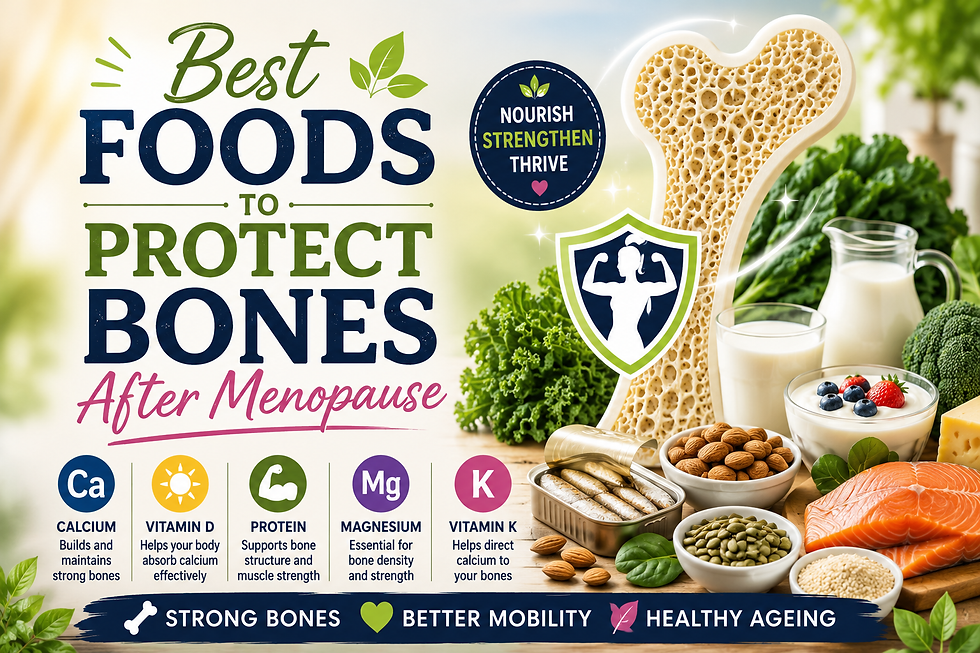
Many women think about bone health only after experiencing a fracture or being diagnosed with osteoporosis. However, by that stage, significant bone loss may already have occurred.
Menopause is one of the most important periods for protecting bone health. As oestrogen levels decline, bones lose density more quickly, increasing the risk of osteoporosis and fractures.
The good news is that nutrition, regular exercise, and healthy lifestyle habits can help maintain stronger bones for many years.
Although no single food can prevent osteoporosis on its own, a balanced diet rich in key nutrients can support bone strength and healthy ageing.
Why Does Bone Loss Increase After Menopause?
Bones are living tissue that is constantly being broken down and rebuilt.
Before menopause, oestrogen helps keep this process in balance.
When oestrogen levels fall, bone breakdown begins to occur faster than bone formation. As a result, women can lose bone density much more rapidly during the first years after menopause.
This increases the risk of:
Osteoporosis
Hip fractures
Wrist fractures
Spine fractures
Loss of height
Reduced mobility
For this reason, protecting bone health should become a priority as women approach menopause.
Calcium: The Building Block of Strong Bones
Calcium is the primary mineral found in bones.
If dietary calcium intake is too low, the body takes calcium from the bones to maintain normal muscle and nerve function.
Good dietary sources of calcium include:
Milk
Natural yoghurt
Kefir
Cheese
Sardines with edible bones
Kale
Broccoli
Watercress
Fortified plant-based drinks
Sesame seeds
Almonds
Eating calcium-rich foods regularly is far more effective than relying on occasional large amounts.
Vitamin D: Helping the Body Absorb Calcium
Without enough vitamin D, the body cannot absorb calcium efficiently.
Vitamin D is produced when the skin is exposed to sunlight, but many women—especially those living in northern countries such as the United Kingdom—may not produce enough throughout the year.
Food sources include:
Salmon
Mackerel
Sardines
Eggs
Fortified cereals
Fortified dairy products
Some women may also benefit from vitamin D supplements after discussing this with their healthcare professional.
Protein: Essential for Healthy Bones
Many people associate protein only with muscles, but bones also depend on adequate protein.
Protein forms part of the bone structure and supports muscle strength, balance and mobility, reducing the risk of falls.
Healthy protein sources include:
Fish
Chicken
Turkey
Eggs
Greek yoghurt
Cottage cheese
Lentils
Chickpeas
Beans
Tofu
Including a source of protein at every meal can support both muscle and bone health.
Magnesium and Vitamin K
Magnesium contributes to normal bone formation and supports muscle function.
Vitamin K helps regulate the proteins involved in building and maintaining healthy bones.
Foods rich in these nutrients include:
Spinach
Kale
Broccoli
Brussels sprouts
Pumpkin seeds
Almonds
Cashews
Whole grains
Avocados
Eating a colourful variety of vegetables every day naturally increases the intake of these important nutrients.
Foods That May Weaken Bone Health
Some eating habits may gradually affect bone health if consumed excessively.
These include:
Too much salt
Sugary soft drinks
Excess alcohol
Highly processed foods
Diets very low in calcium
Smoking (which also increases osteoporosis risk)
Moderation is key. Occasional treats are not the problem, but long-term dietary patterns make a significant difference.
Exercise Is Just as Important as Nutrition
Food provides the nutrients bones need.
Exercise tells the body to keep bones strong.
Weight-bearing activities are particularly beneficial, including:
Walking
Dancing
Stair climbing
Resistance training
Bodyweight exercises
Light strength training
These activities stimulate bone formation while also improving balance and reducing the risk of falls.
A Bone-Friendly Daily Meal Plan
Breakfast
Greek yoghurt with oats, almonds and fresh berries.
Lunch
Grilled salmon with broccoli, quinoa and mixed green salad.
Snack
An apple with a handful of almonds.
Dinner
Roast chicken with sweet potato, kale and steamed vegetables.
Evening
A glass of milk or calcium-fortified plant drink, if appropriate.
Conclusion
Strong bones are built over a lifetime, not overnight.
After menopause, bone health deserves special attention because hormonal changes naturally accelerate bone loss. Fortunately, healthy eating, regular exercise and good lifestyle habits can make a real difference.
A diet rich in calcium, vitamin D, protein, magnesium and vitamin K provides the nutrients bones need to stay strong and resilient.
Combined with regular physical activity and appropriate medical advice when needed, these daily habits can help women remain active, independent and healthy for many years to come.
Healthy bones support a healthier, stronger future.
Comments